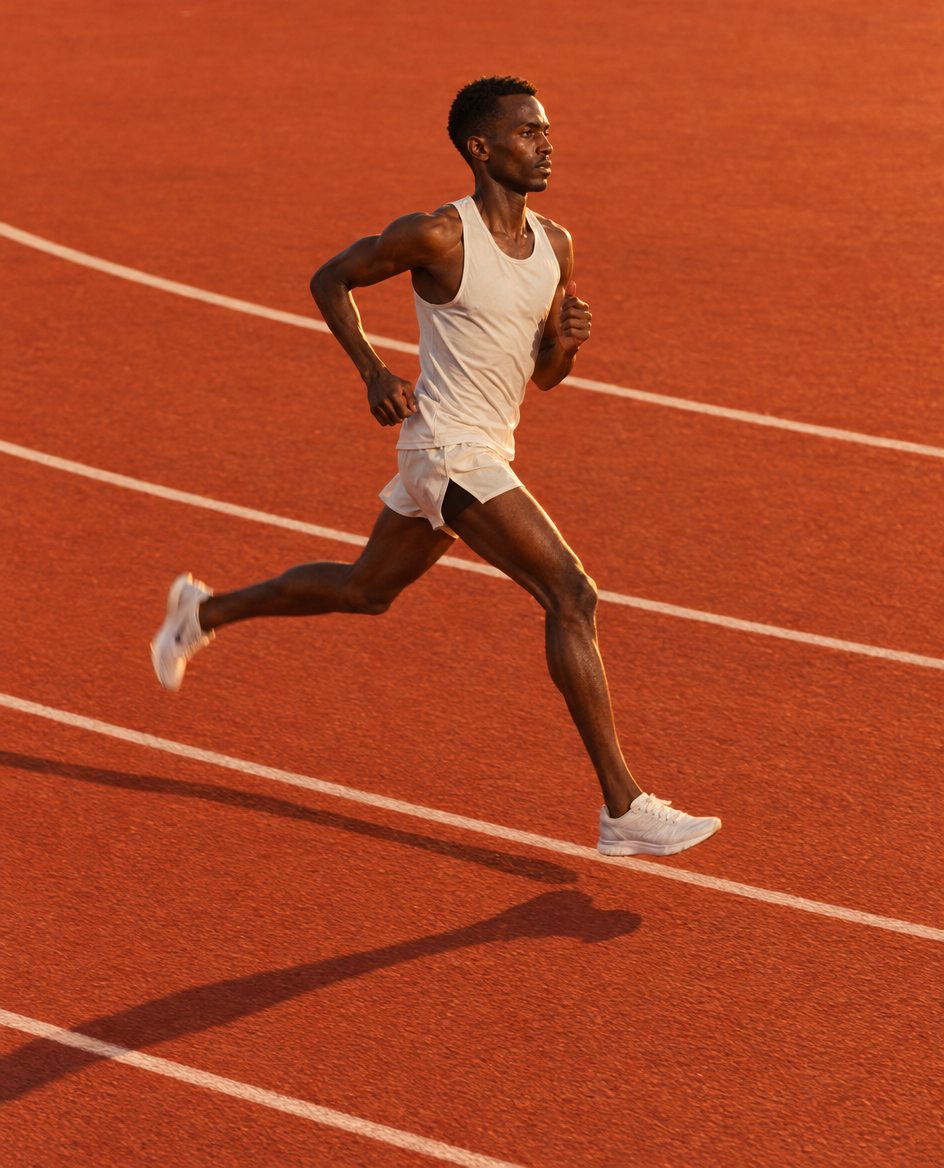
Watch: what to eat before running in under 80 seconds
A banana can be enough before a short run. It isn't a complete fuelling plan for a marathon. And a nutritious bowl of porridge can still be the wrong breakfast if you eat a large portion ten minutes before heading out.
The video covers the timing basics. The rest of this guide gives you practical food choices, the estimated nutrients in defined portions, and a way to plan everything from an easy 5K to a 50K ultra.
Read the video transcript
What should you eat before running? Start with the clock. How long you've got matters more than finding one perfect food.
Two to three hours to go? Have a balanced meal with carbohydrates and some protein. Try porridge with low-fat milk and fruit, or chicken and rice. Give a larger meal time to settle.
One to two hours? Keep it lighter. A banana or a slice of toast is a simple option. You don't need a special sports product for an ordinary short run.
Less than an hour? If you need food, choose a small, easy-to-digest snack, like a banana. Go easy on fatty or very high-fibre foods close to running if they upset your stomach.
For a short, easy run, you may be fine without eating first if that suits you. Longer or harder runs need more fuel planning. Don't treat them like a quick jog.
Start hydrated, sip water, and test your food on training runs. Race morning is not the time to try a completely new breakfast.
Save this for your next run. Get the full food and timing guide at Eat Like You Train dot com. The link is in the description.
Start with carbohydrates, then consider the whole meal
Carbohydrate helps fuel running. Your body stores some as glycogen, but those stores are limited. The longer or harder the session, the more attention fuelling deserves. Protein supports muscle repair and adaptation; it is part of your overall diet, but extra chicken does not replace the carbohydrate in a race breakfast. (Source: British Dietetic Association: sport and exercise)
Fat and fibre belong in a healthy diet. Close to running, however, a large amount can be uncomfortable for some people. A smaller, lower-fat, lower-fibre meal can be easier to tolerate before a demanding session. This is a timing adjustment, not a reason to avoid vegetables or wholegrains all week. (Source: BHF)
Micronutrients matter too, but they do a different job. Iron, calcium and vitamins support normal body functions and health over time. A high-potassium breakfast does not guarantee a cramp-free race, and a vitamin-rich meal cannot make up for insufficient energy.
What to eat before running, by the time you have
Two to three hours before: a familiar meal
Porridge made with milk and topped with fruit is a useful breakfast option. Chicken and rice can suit a later start. Keep the portion appropriate to your appetite, body size and session, and allow longer if a substantial meal feels heavy.
Race-focused sports dietitian advice often allows 3–4 hours for a larger meal. That does not contradict the everyday 2–3-hour guide: the size and composition of the food matter. (Source: Exercise Right with Sports Dietitians Australia)
One to two hours before: a lighter snack
A banana or a slice of toast is a straightforward choice. If you need more carbohydrate and have practised it, toast with jam and a banana provides a larger amount without much fat. That larger combination is closer to a light breakfast than a last-minute bite.
Less than an hour before: small and easy
If you need food, choose a small portion you know sits well. You do not have to finish a whole meal just because you are about to run. For a short, easy session, some people are comfortable without eating immediately beforehand. This is not a recommendation to under-fuel demanding sessions or to use fasted running as a weight-loss rule. (Source: BHF)
Six pre-run meals and what's actually in them
The following are defined example portions, not estimates of the serving sizes shown in the video's AI illustrations. Choose one that fits your timing; these are not foods you need to eat together.
A. Porridge with milk, banana and blueberries
Use 60g dry unfortified porridge oats, 250g semi-skimmed milk, 100g peeled banana and 50g blueberries. Cook the oats with the milk and water as needed, then add the fruit. No honey, sugar or nut butter is included in the calculation.
This provides carbohydrate plus useful protein and calcium. It also contains more fibre and fat than plain toast, so leave time to digest it. If oats or milk cause symptoms, use a familiar alternative; the nutrition figures will change.
B. Chicken, rice and broccoli
Use 250g cooked white long-grain rice, 100g cooked skinless grilled chicken breast and 80g cooked broccoli. The rice and broccoli are cooked without added salt. No oil, sauce or butter is included.
This is a substantial meal with plenty of protein. It may suit an afternoon run when eaten several hours beforehand, or recovery afterwards. If a full chicken portion feels heavy before running, reduce it rather than forcing the meal down; keep enough rice for your carbohydrate needs.
C. One banana
The calculation uses 120g edible banana flesh, weighed without the skin. Real bananas vary in size. This is a small carbohydrate snack, not a complete breakfast or a substitute for a longer-run fuelling plan.
D. One slice of plain white toast
The calculation uses 35g white toast, weighed after toasting, without butter or toppings. Slice sizes and moisture loss vary, so weigh your actual portion or use the bread packet's per-slice information.
E. Two slices of toast, jam and banana
Use 70g white toast after toasting, 30g standard stone-fruit jam, such as apricot, and 120g peeled banana. No butter is included. The nutrient calculation uses the dataset's average stone-fruit jam, not a specific brand or reduced-sugar recipe.
This is a low-fat, carbohydrate-focused breakfast option. It is not automatically right for everybody: the larger portion and fruit may still need more digestion time. Practise it before relying on it for a race.
F. A larger rice bowl
Use 350g cooked white long-grain rice, 75g cooked skinless grilled chicken breast and 50g cooked broccoli, again without added oil, sauce or salt.
This shifts the balance towards carbohydrate by increasing rice rather than simply doubling the meat. It is a large bowl: use it only when it fits your needs and you have adequate time before running. It can also work as a post-run meal.
Estimated energy and macros per complete portion
| Meal or snack | Energy | Carbohydrate* | Protein | Fat | Fibre |
|---|---|---|---|---|---|
| A. Porridge, milk and fruit | 445 kcal | 79.0g | 16.9g | 9.3g | 6.8g |
| B. Chicken, rice and broccoli | 498 kcal | 80.0g | 41.6g | 3.6g | 3.5g |
| C. Banana, 120g flesh | 97 kcal | 24.4g | 1.4g | 0.1g | 1.7g |
| D. Plain white toast, 35g | 93 kcal | 19.7g | 3.4g | 0.7g | 1.1g |
| E. Toast, jam and banana | 362 kcal | 84.5g | 8.4g | 1.5g | 4.1g |
| F. Larger rice bowl | 584 kcal | 110.3g | 35.5g | 3.3g | 3.2g |
How these figures were calculated: ingredient weights multiplied by nutrient values per 100g from the UK Composition of Foods Integrated Dataset, 2021, then added together. Values are estimates, rounded for readability. They are not laboratory measurements of your meal. Rice and chicken weights are cooked; oats are dry; milk is weighed in grams. Do not substitute dry rice weights into these portions. (Source: CoFID dataset and user guide)
CoFID expresses carbohydrate as monosaccharide equivalents, which can give higher figures than packet-label carbohydrate. These tables retain that convention consistently. Energy is taken from the dataset, not recalculated using a simple 4/4/9 formula. For precise race-fuel counting, use the current labels on the actual bread, gels, drinks and other products you buy. The CoFID guide explains these differences. Added water changes the porridge's weight, not its ingredient totals. No further vitamin-retention correction has been applied to heating the oats and milk.
Selected minerals per portion
| Meal | Sodium | Potassium | Calcium | Magnesium | Iron | Zinc |
|---|---|---|---|---|---|---|
| A | 109mg | 976mg | 341mg | 125mg | 2.8mg | 2.6mg |
| B | 87mg | 660mg | 57mg | 60mg | 1.0mg | 2.1mg |
| C | Trace | 396mg | 7mg | 32mg | 0.3mg | 0.2mg |
| D | 172mg | 58mg | 76mg | 10mg | 0.7mg | 0.4mg |
| E | 357mg | 533mg | 161mg | 53mg | 1.7mg | 0.9mg |
| F | 83mg | 493mg | 54mg | 52mg | 0.7mg | 2.2mg |
Selected vitamins, iodine and selenium per portion
| Meal | Vitamin C | Folate | Vitamin B6 | Vitamin B12 | Iodine | Selenium |
|---|---|---|---|---|---|---|
| A | 17mg | 60µg | 0.67mg | 2.25µg | 79µg | 4.3µg |
| B | 35mg | 43µg | 0.79mg | Trace | 9µg | 29.3µg |
| C | 11mg | 17µg | 0.37mg | 0µg | 4µg | Trace |
| D | 0mg | 11µg | 0.04mg | 0µg | 2µg | 1.8µg |
| E | Not available | 38µg | 0.44mg | 0µg | 9µg | 3.5µg |
| F | 22mg | 36µg | 0.63mg | Trace | 6µg | 30.0µg |
These are selected micronutrients, not a complete vitamin-and-mineral profile. 1mg = 1,000µg. Trace inputs contribute zero to the arithmetic but are flagged where the total would otherwise appear to be zero. Missing data is not treated as zero: vitamin C for the jam entry is unavailable, so meal E's full vitamin C total cannot be reported. The other ingredients still contain vitamin C. Seasonal milk composition, brands, cooking, storage and portions all affect actual values. Sodium is not salt: salt equivalent in grams is approximately sodium in milligrams × 2.5 ÷ 1,000. The low sodium in the rice bowls assumes no added salt or sauce. (Source: CoFID methodology)
What the micronutrients mean for runners
Iron supports the red blood cells that carry oxygen. The porridge bowl contributes iron, but eating it does not diagnose or treat deficiency. Persistent unexplained tiredness or a decline in performance deserves attention rather than automatic iron supplementation; excessive supplemental iron can be harmful. (Source: NHS: iron)
Calcium is one reason the milk-based breakfast differs nutritionally from plain toast or rice. The BDA highlights calcium, iron and vitamin D as nutrients active people should pay attention to. These meals do not provide a reliable vitamin D strategy: the calculated rice bowls contain only about 0.2–0.3µg, and the other examples contain zero or trace amounts in this dataset. (Source: BDA)
Potassium and magnesium contribute to normal body functions, including fluid balance and energy metabolism. Their presence makes food nutritionally useful, but a banana is not a guaranteed cramp treatment or a replacement for sodium lost in sweat. (Source: NHS: other vitamins and minerals)
B vitamins and folate support functions including energy metabolism and healthy blood-cell formation. They do not supply the calories in your meal. More is not automatically better, and a vitamin supplement cannot replace adequate food. (Source: NHS: B vitamins and folate)
For race morning, the practical priorities remain sufficient carbohydrate, appropriate portions and digestive comfort. Nutritional variety belongs across the whole day and week.
Plan by time on your feet, not distance alone
A fast 10K and a 90-minute run-walk over the same distance place different demands on your fuelling plan. A hilly 50K can take far longer than a flat one. Use your expected duration, effort, weather and opportunities to eat or drink.
As a broad endurance framework:
- Under about 45 minutes: carbohydrate during the run is generally unnecessary.
- Around 45–75 minutes of hard exercise: small amounts can help performance; this does not mean every easy run needs a gel.
- Around 1–2.5 hours: 30–60g carbohydrate per hour is a common working range.
- Beyond roughly 2.5–3 hours: trained runners may benefit from working towards 60–90g per hour, usually using glucose-plus-fructose sources at the higher rates. Build and test tolerance rather than jumping straight to 90g.
These are overlapping guidelines, not switches that flip at a particular minute. Lower-intensity running may call for a different intake, and tolerable delivery matters. (Sources: Australian Institute of Sport: duration-based carbohydrate table; Jeukendrup: personalised carbohydrate guidance; Contemporary endurance carbohydrate review)
From 5K to 50K: a practical distance guide
The times below are arithmetic examples at 6:00 per kilometre, not predictions, typical finishing times or targets. Replace them with your own expected duration, especially on trails. The meal suggestions are starting points, not prescribed portions.
| Distance | Time at 6:00/km | Before running | During: adjust to your actual duration |
|---|---|---|---|
| 5K | 30 min | Normal eating; banana or toast if wanted and tolerated. | Usually no carbohydrate needed during. |
| 10K | 1 hour | A familiar meal earlier or light snack with time to digest. | Often no fuel needed on an easy hour; small amounts may help a hard effort. If substantially longer, use the duration guide. |
| 15K | 1 hour 30 | A carbohydrate-containing breakfast such as A or E, with enough digestion time. | Practise 30–60g/hour rather than relying solely on breakfast. |
| 20K | 2 hours | Familiar breakfast; check that the portion fits your own needs. | 30–60g/hour is a useful working range. |
| Half marathon: 21.1K | About 2 hours 7 | Rehearse breakfast, timing and any top-up snack. | Commonly 30–60g/hour; longer finish times may justify a higher practised intake. |
| 25K | 2 hours 30 | Plan both the pre-run meal and carried fuel. | At the transition between ranges: choose an intake you have rehearsed, not an automatic jump. |
| 30K | 3 hours | Use a race-style breakfast and test the full plan on long runs. | Work towards the longer-duration range as tolerated; count drinks as well as food. |
| 35K | 3 hours 30 | Arrive fuelled from the previous day, not just breakfast. | A sustained, practised intake matters; check aid-station spacing. |
| 40K | 4 hours | Use your rehearsed marathon-style meal and timing. | Plan fuel for the whole outing, with a sensible reserve. |
| Marathon: 42.195K | About 4 hours 13 | Consider a practised carbohydrate-loading plan, then familiar breakfast. | For a performance-focused plan, work towards 60–90g/hour if tolerated. Do not introduce a new high intake on race day. |
| 45K | 4 hours 30 | Start applying ultra-specific logistics: terrain, supplies and food variety. | Use the long-duration framework, adjusted for intensity and stomach tolerance. |
| 50K | 5 hours | Familiar breakfast plus an event-length food, fluid and resupply plan. | See the ultra section below: some practical ultra plans use lower rates than a fast road-marathon plan. |
The table applies the duration-based evidence above; there is no separate clinical carbohydrate prescription for every 5K increment.
How much should you eat before a half marathon or marathon?
Sports-nutrition guidance commonly uses 1–4g carbohydrate per kilogram of body weight in the 1–4 hours before exercise lasting more than an hour. This is a broad athlete-planning range, not an instruction to eat its upper end before every run. For a 70kg runner, it spans 70–280g. The appropriate point depends on time available, session demands, previous meals and tolerance. (Source: Endurance carbohydrate review)
Our porridge, standard rice bowl and toast breakfast each contain roughly 80g of carbohydrate using the dataset's convention. The larger rice bowl contains roughly 110g. A banana alone is much smaller. Use those comparisons to judge scale, then check the labels and portions you actually use.
If your plan requires more carbohydrate, distribute it sensibly across familiar foods and sufficient time. Do not force a very large meal into the final hour. If your stomach struggles, choose a less bulky option and get individual advice rather than repeatedly starting races uncomfortable.
Do you need to carbohydrate-load?
An easy 5K does not require a special loading phase. For demanding events lasting more than about 90 minutes, carbohydrate loading can increase glycogen availability. Formal protocols can reach 10–12g/kg/day for 36–48 hours, alongside reduced training. That is a substantial amount: 700–840g per day for a 70kg runner. It needs planning and practice, and it is separate from the pre-race breakfast range. (Source: Endurance carbohydrate review)
Do not interpret loading as one enormous pasta dinner, unlimited eating, or a requirement for every weekend run. A sports dietitian can help make a demanding race plan manageable.
What changes when you run 50K?
A 50K is an ultra, but the distance alone does not tell you whether you will be moving for four hours or ten. Climbs, technical ground, walking sections, weather and aid-station access all change the practical problem.
The ISSN's ultra-marathon position stand gives a practical 30–50g carbohydrate/hour recommendation alongside wider energy and food considerations. General endurance guidance supports higher intakes, up to about 90g/hour, for prolonged performance when tolerated. These recommendations have different contexts; neither means every 50K runner must use the same number. (Source: ISSN ultra-marathon position stand)
For a recreational first 50K, 30–60g/hour can be a practical starting range to test in training, rather than a universal prescription. A faster runner with a trained gut may work towards 60–90g/hour. If you cannot tolerate your planned intake, revise the foods, spacing and target with help rather than repeatedly forcing more into an unsettled stomach.
On longer outings, food variety can make eating more manageable. Familiar soft sandwiches, rice-based foods, bananas, gels, chews and drinks are possible tools. Test the actual choices while moving. Some runners welcome savoury food later; heavy, fatty portions can still be difficult. Plan what you will carry, what aid stations supply and what happens if an expected food is unavailable.
Two worked fuelling examples
A four-hour long run at 50g/hour: total planned carbohydrate is 200g. If your chosen gels contain 25g each, eight gels supply that amount. One at 15 minutes and every 30 minutes thereafter gives eight servings by 3 hours 45. This is an arithmetic example, not a claim that eight gels suit every runner. Check whether the product needs water and count any carbohydrate drink in the same total.
A six-hour 50K at a practised 60g/hour: total planned carbohydrate is 360g. One possible hourly combination is two 25g-carbohydrate gels plus 10g carbohydrate from a measured portion of chews. Divide intake through the hour. Over six hours, that is twelve gels and six measured chew portions; food from aid stations can replace some of them if you know its carbohydrate content and tolerate it.
Those examples do not include pre-race breakfast and do not attempt to replace every calorie burned. If your actual 50K will take eight hours, six hours of food is not enough for the same hourly plan. Carry an appropriate reserve and follow the event's kit requirements.
Water, sodium and the mistake of drinking too much
Start normally hydrated and make sure you can access fluid during longer or hotter runs. Use thirst as a practical guide; experienced runners may refine a plan using sweat-rate observations, conditions and professional advice. Do not force a fixed large volume simply because a schedule says so.
Sodium-containing food or drinks can be useful during prolonged sweaty exercise, but requirements vary. Sodium and salt are not the same quantity, and more is not automatically better. Crucially, salt tablets or sports drinks do not prevent exercise-associated hyponatraemia if you drink excessively. (Source: Exercise-associated hyponatraemia review)
Keep carbohydrate planning and fluid planning connected but distinct. If you drink less of a carbohydrate drink in cool weather, you may need another fuel source. If you drink more in heat, include those extra carbohydrates in your total rather than accidentally adding them on top of an unchanged gel schedule.
After the run: finish the fuelling job
Have a meal or snack containing carbohydrate and protein, and replace fluid according to your needs. The chicken-and-rice bowls can work here as well. If you have several hours before another demanding session, rapid carbohydrate replacement becomes more important; after a normal easy run with plenty of recovery time, regular balanced meals are generally a more useful focus than chasing a narrow recovery window. (Source: BDA)
Read our what to eat after a run guide for the next step.
Build your next-run plan
Choose a familiar meal or snack, write down when you will eat it, and estimate how long you will be running. If it is a longer outing, add an hourly fuel target and check that your carried food and resupply plan cover the duration. Afterwards, note how your stomach felt and adjust one thing at a time.
Save this guide, and practise your plan before race day. For early starts, see what to eat before running in the morning. For support with the training side, explore James's running strength plan at JG Fitness.
FAQs
Is a banana enough before a 5K?
It can be a useful snack. Whether you need it depends on when you last ate, how hard you will run and what feels comfortable. A short easy run does not require an elaborate sports-nutrition routine.
Should I choose white or wholemeal toast?
Wholegrains can be part of your usual healthy diet. Near a run, white toast may suit you if you prefer less fibre. Use what you have tested; the white-toast figures above do not apply unchanged to wholemeal bread.
Can I use plant milk in the porridge?
Yes, if it suits you, but do not assume identical protein, calcium, iodine or B12. Products and fortification differ. Check your carton and recalculate the meal if you need accurate figures; the table above specifically uses semi-skimmed cow's milk.
Should every marathon runner aim for 90g carbohydrate per hour?
No. It is an upper-end target within a common endurance range, not a minimum for everyone. Your race duration, effort, experience and gut tolerance matter. Build your plan in training.
Are these exact nutrition values?
No. They are reproducible estimates for weighed ingredients using one named database. Packet labels and real portions differ. AI food illustrations do not establish serving weight, and missing micronutrient data must not be filled in with guesses.
Sources
- Public Health England, Composition of Foods Integrated Dataset (CoFID) 2021 and user guide. Meal estimates use food codes 11-788, 12-313, 14-318, 14-325, 11-862, 18-323, 13-503, 11-1001 and 17-688. The 2021 release includes values carried forward from earlier analyses. www.gov.uk/government/publications/composition-of-foods-integrated-dataset-cofid
- McCance and Widdowson's Composition of Foods Integrated Dataset 2021, user guide and methodology. assets.publishing.service.gov.uk/media/60538e66d3bf7f03249bac58/McCance_and_Widdowsons_Composition_of_Foods_integrated_dataset_2021.pdf
- NHS Better Health, Couch to 5K running plan (opened 2 Nov 2026). www.nhs.uk/better-health/get-active/get-running-with-couch-to-5k/couch-to-5k-running-plan
- British Heart Foundation, Food for fitness: what should I eat before a workout? (opened 2 Nov 2026). www.bhf.org.uk/informationsupport/heart-matters-magazine/nutrition/food-for-fitness
- British Dietetic Association, Sport and exercise food fact sheet (opened 2 Nov 2026). www.bda.uk.com/resource/sport-exercise-nutrition.html
- Exercise Right and Sports Dietitians Australia, What should I eat or drink before and after I run? exerciseright.com.au/articles/what-should-i-eat-or-drink-before-and-after-i-run
- Australian Institute of Sport, sports foods guidance: how much carbohydrate to use, by exercise duration. www.ausport.gov.au/ais/nutrition/supplements/group_a/sports-foods2/sports-bar2/how-and-when-do-i-use-it
- Jeukendrup A. A step towards personalized sports nutrition: carbohydrate intake during exercise. Sports Med 2014;44(Suppl 1):S25-33. pmc.ncbi.nlm.nih.gov/articles/PMC4008807
- Gatorade Sports Science Institute, Dietary carbohydrate and the endurance athlete: contemporary perspectives. An industry-hosted scientific review, used alongside independent and professional-body sources, not as a product endorsement. www.gssiweb.org/sports-science-exchange/article/dietary-carbohydrate-and-the-endurance-athlete-contemporary-perspectives
- Tiller NB et al. International Society of Sports Nutrition position stand: nutritional considerations for single-stage ultra-marathon training and racing. J Int Soc Sports Nutr 2019;16:50. pmc.ncbi.nlm.nih.gov/articles/PMC6839090
- Hew-Butler T et al. Exercise-associated hyponatremia: 2017 update. Front Med 2017;4:21. pmc.ncbi.nlm.nih.gov/articles/PMC5334560
- NHS, Vitamins and minerals: iron. www.nhs.uk/conditions/vitamins-and-minerals/iron
- NHS, Vitamins and minerals: B vitamins and folic acid. www.nhs.uk/conditions/vitamins-and-minerals/vitamin-b
- NHS, Vitamins and minerals: others. www.nhs.uk/conditions/vitamins-and-minerals/others